
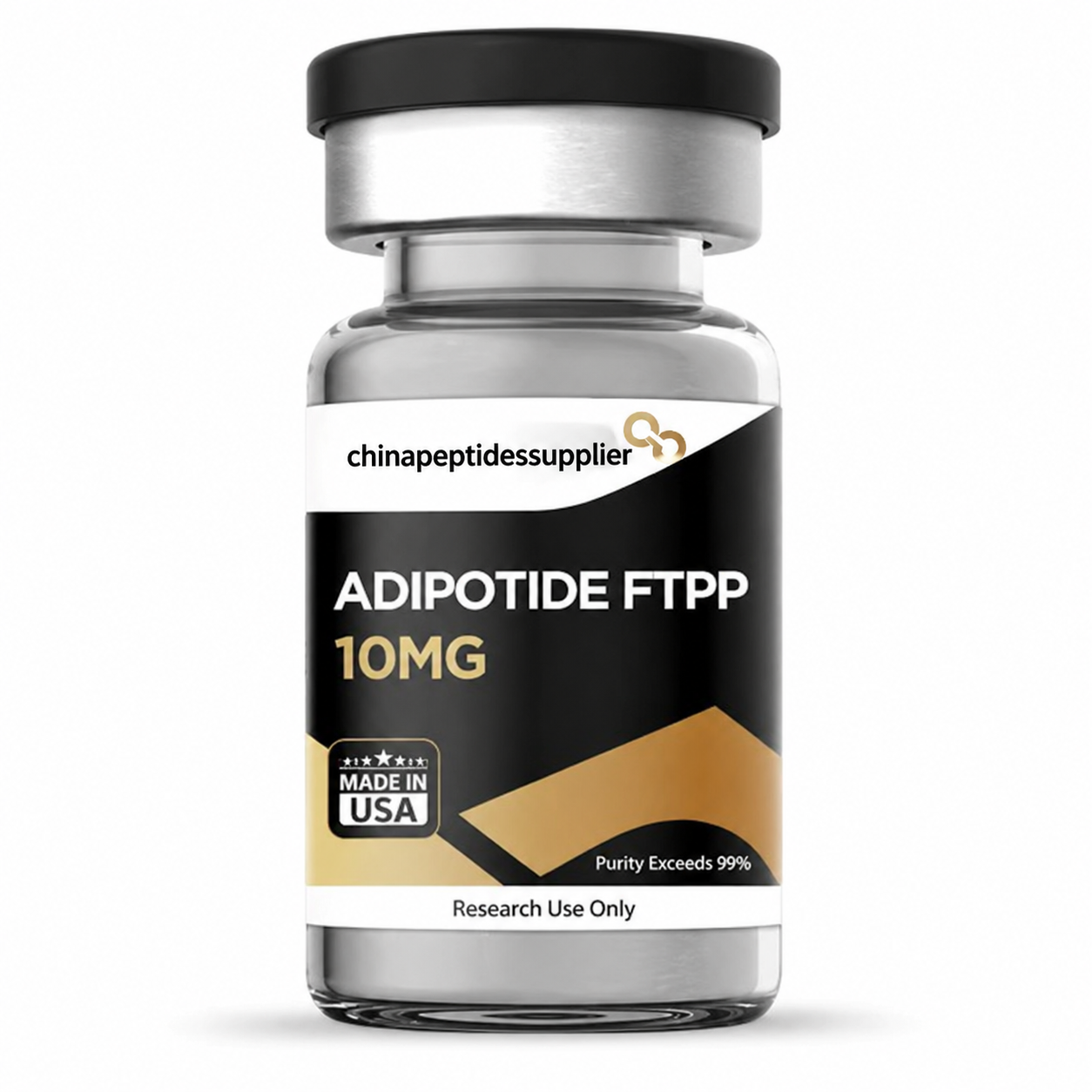
Buy Adipotide (FTPP) (10mg) Online

$78.00
Buy Adipotide (FTPP) (10mg) Online. Adipotide, also known as FTPP (Fat-Targeted Proapoptotic Peptide), has attracted attention in the scientific
Buy Adipotide (FTPP) (10mg) Online
Buy Adipotide (FTPP) (10mg) Online. Adipotide, also known as FTPP (Fat-Targeted Proapoptotic Peptide), has attracted attention in the scientific community due to its unique approach to targeting fat tissue. Unlike traditional weight management compounds, Adipotide has been studied for its potential to selectively affect adipose tissue through a targeted biological mechanism.
In this article, we explore what Adipotide (FTPP) is, how it works, its research background, and why it has become a subject of growing interest in peptide science.
For more research compounds and peptide-related information, you can visit:
Website: https://chinapeptidessupplier.com/
Email: info@chinapeptidessupplier.com
What Is Adipotide (FTPP)?
Adipotide (FTPP) is a synthetic peptide compound studied primarily in preclinical research settings. It is designed to target blood vessels that supply fat tissue, making it fundamentally different from many compounds that act directly on metabolism or appetite.
The peptide gained attention due to its targeted mechanism, which focuses on reducing fat tissue by disrupting its vascular support system.
It is important to note that Adipotide is not approved for human therapeutic use and remains within the realm of scientific and laboratory research.
How Adipotide Works
The mechanism of Adipotide is what makes it particularly interesting in peptide research.
Targeting Fat Tissue Blood Supply
Adipotide works by binding to specific receptors found in the blood vessels of white adipose tissue. Once bound, it triggers a process that can lead to:
- Disruption of blood supply to fat cells
- Induction of apoptosis (cell death) in targeted tissue
- Reduction in fat tissue volume in research models
This process is often described as vascular targeting, which distinguishes Adipotide from other experimental compounds.
The Science Behind FTPP
The name FTPP stands for Fat-Targeted Proapoptotic Peptide, reflecting its intended biological function.
It combines two important elements:
- Targeting Sequence – directs the peptide specifically to fat tissue vasculature
- Proapoptotic Component – induces cell death in the targeted cells
This dual-function design is a key reason why Adipotide has been widely discussed in peptide and metabolic research fields.
Research Studies and Findings
Adipotide has primarily been studied in animal models, where researchers have explored its potential effects on fat tissue.
Key Research Observations
Some studies have reported:
- Reduction in fat mass in obese animal models
- Changes in body composition
- Effects on metabolic markers
However, these findings are limited to controlled research environments, and results may not translate to humans.
Important Limitations
- Lack of large-scale human clinical trials
- Unknown long-term safety profile
- Potential side effects not fully understood
Because of these limitations, Adipotide remains a research-only compound.
Why Adipotide Is Gaining Attention
Despite its experimental status, Adipotide has become a topic of interest due to its innovative approach.
Unique Mechanism
Unlike traditional compounds that focus on appetite or metabolism, Adipotide targets the structural support system of fat tissue.
Scientific Curiosity
Researchers are interested in understanding how vascular-targeting peptides could be used in broader medical applications.
Potential Research Applications
Adipotide is being explored in areas such as:
- Obesity-related studies
- Metabolic research
- Peptide-based therapeutic development
Differences from Traditional Weight Management Compounds
Adipotide stands apart from other compounds often discussed in metabolic research.
| Feature | Traditional Compounds | Adipotide |
|---|---|---|
| Target | Metabolism/Appetite | Fat tissue vasculature |
| Mechanism | Hormonal or enzymatic | Cellular apoptosis |
| Research Stage | Some clinically approved | Preclinical/experimental |
This distinction highlights why Adipotide is considered innovative but still highly experimental.
Safety and Regulatory Status
One of the most important aspects to understand about Adipotide is its regulatory status.
- Not approved by major regulatory bodies
- Not intended for human consumption
- Limited safety data available
Because of this, Adipotide is typically categorized as a research chemical.
Important Reminder
Any compound that has not undergone proper clinical testing should be approach with caution, and its use should be limite strictly to laboratory research environments.
Storage and Handling (Research Context)
In laboratory settings, peptides like Adipotide require proper handling to maintain stability.
General guidelines often include:
- Storage in a cool, dry environment
- Protection from light and contamination
- Use of appropriate laboratory protocols
Proper handling is essential to preserve peptide integrity during research use.
Growing Interest in Peptide Research
Adipotide is part of a broader trend in peptide-based scientific exploration. Peptides are increasingly being studied for their potential roles in:
- Targeted therapies
- Hormonal regulation
- Cellular signaling
- Precision medicine
This growing interest has contributed to increased visibility for compounds like FTPP.
Ethical and Scientific Responsibility
As with any experimental compound, ethical considerations are essential.
Researchers and institutions are encourage to:
- Follow regulatory guidelines
- Conduct controlled and ethical studies
- Avoid unverified applications
- Prioritize safety and transparency
Responsible research helps ensure that scientific advancements are both safe and meaningful.
Learning More About Research Peptides
If you are interest in peptide science and research developments, there are many resources available to expand your knowledge.
For additional insights into research compounds and peptide-related topics, you can explore:
Website: https://chinapeptidessupplier.com/
Email: info@chinapeptidessupplier.com
These platforms can provide general information about peptide research and scientific developments.
Final Thoughts
Adipotide (FTPP) (10mg) represents a fascinating area of peptide research, offering a unique approach to targeting fat tissue through vascular disruption. Its innovative mechanism has sparked interest among researchers exploring new ways to understand metabolic processes.
However, it is crucial to recognize that Adipotide remains an experimental compound, with limited human research and no regulatory approval for therapeutic use. As such, its role is currently confine to scientific and laboratory investigation.
As peptide science continues to evolve, compounds like Adipotide highlight both the potential and the challenges of developing targeted biological solutions. Continued research, ethical practices, and rigorous testing will be essential in determining the future of such compounds.
Be the first to review “Buy Adipotide (FTPP) (10mg) Online”
Related products
Peptides

Peptides
Peptides

Peptides
Peptides

Peptides
Reviews
There are no reviews yet.